
- Take a quick memory test and write down your score (your baseline).
- Build your first memory palace: 10 places in your home, in order.
- Learn one technique from this page (link or story method) and use it on a 10-word list.
- Play one round of the championship practice games on THE Golden Library.
Memory training: what works, how to start, where to practise
In here you will find courses, books and links for training your memory. There are games to test and train your memory also available on this site.
Memory is a trainable skill. Below: a memory palace you can build in 15 minutes, the core techniques, what research says, memory sports (with a Belgian world no. 3) and where to practise.
Start in 15 minutesPlay the memory games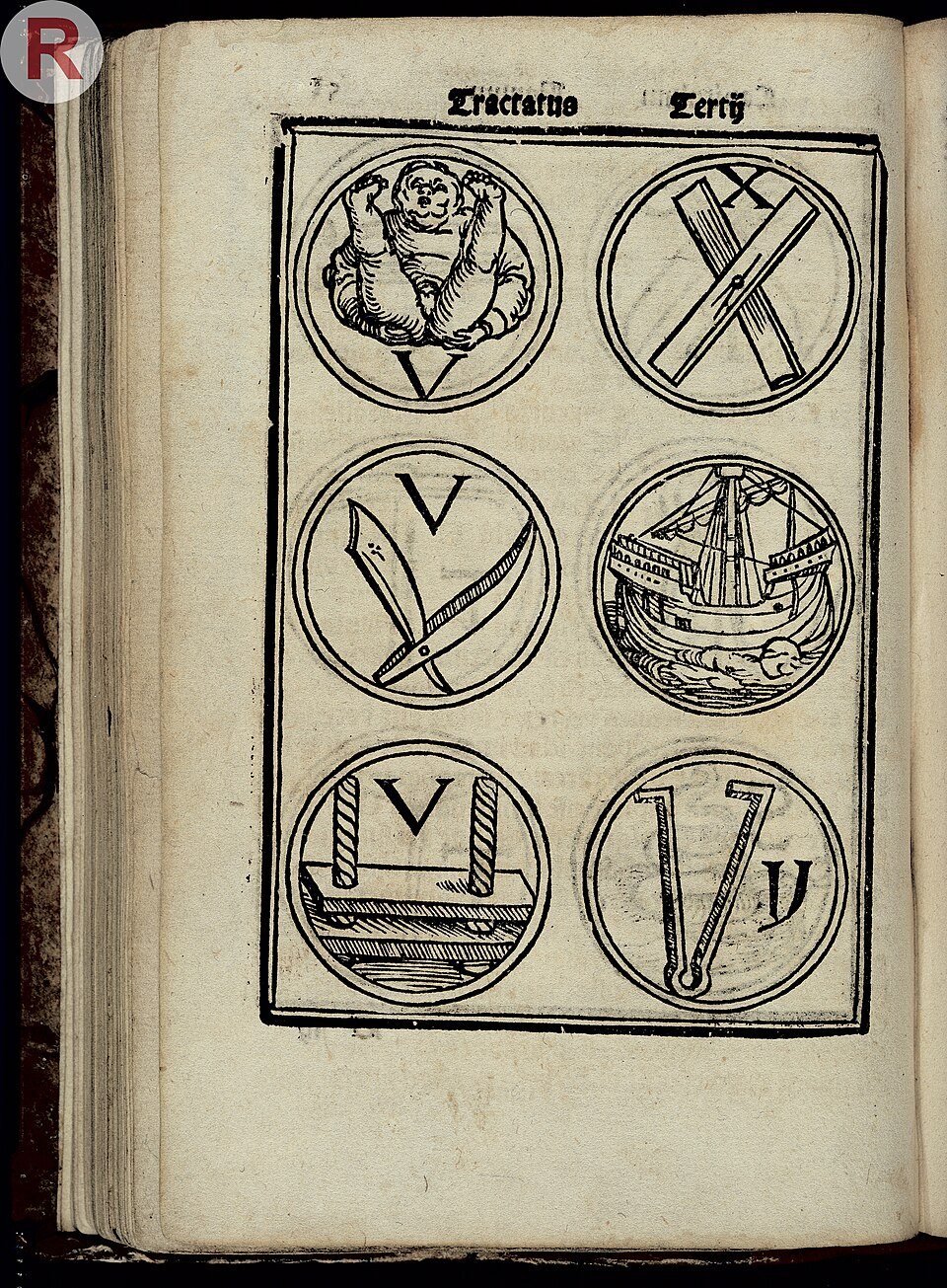
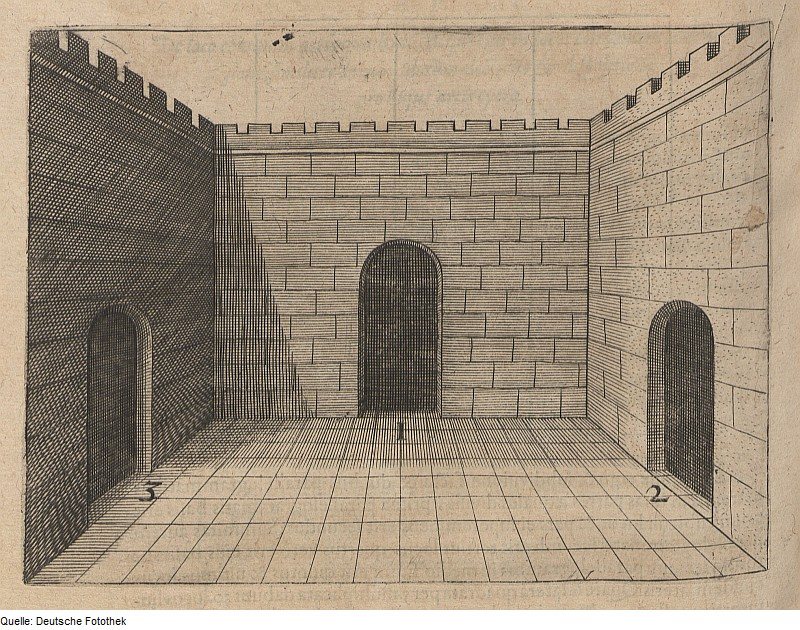
My picks: a course and two books

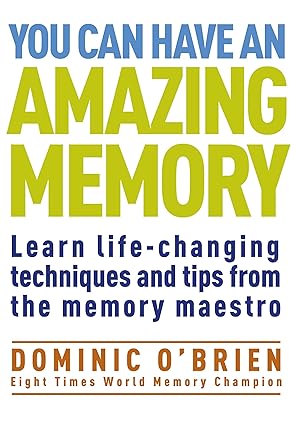
As an Amazon Associate I earn from qualifying purchases.
At a glance
In short: the memory palace and the number systems are real, learnable skills for lists, numbers, names and vocabulary. For long-term learning, testing yourself and spacing your reviews are the best-supported habits. “Brain games” mostly make you better at the games themselves.
Your first memory palace in 15 minutes
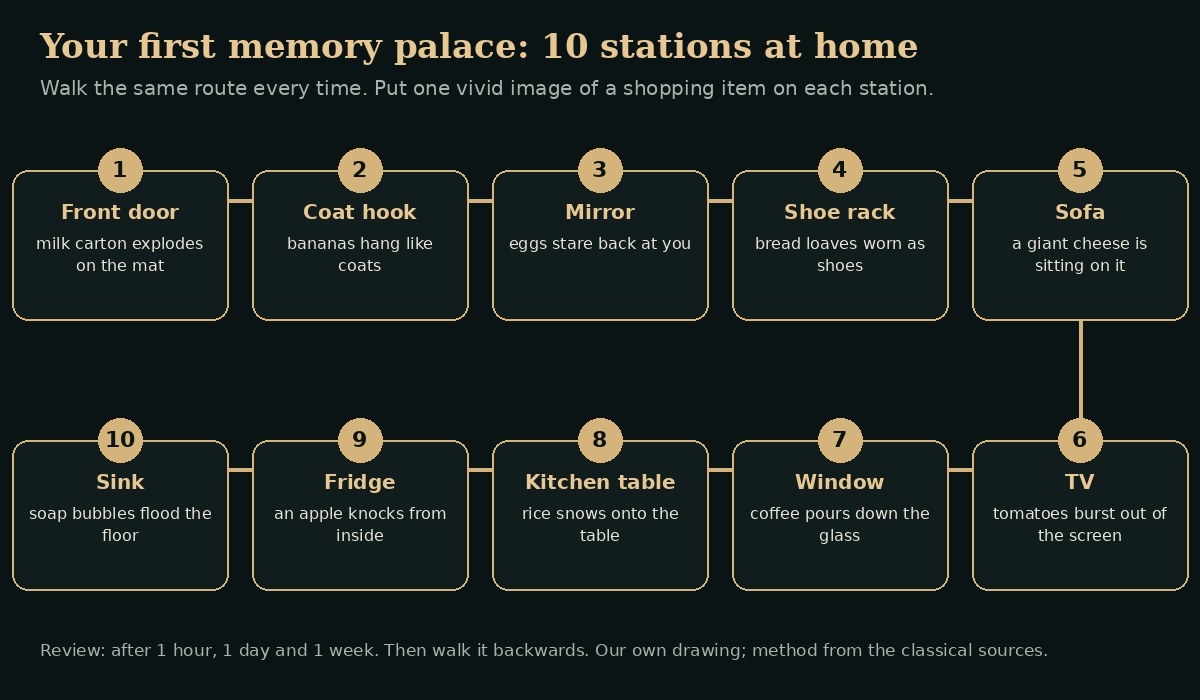
The memory palace (method of loci) is the oldest and best-studied technique. You place vivid images of what you want to remember along a route you already know well, then “walk” the route in your head to get them back.
- Pick a place you know well, such as your home, and fix 10 stations in a strict order: front door, coat hook, mirror, sofa…
- Turn each item into a picture that is concrete, exaggerated and moving, and uses several senses.
- Make it interact with its station: the milk carton explodes on the doormat.
- Walk the route forwards and backwards in your head. Review after 1 hour, 1 day and 1 week.
- One palace per subject. Reuse a palace once the old images have faded.
The core techniques, with a short how-to each
These are the standard techniques from the classic books and the memory-sport world. The evidence for them is in the science section.
- 10 stations, one vivid image each
- Walk it forwards and backwards
- Review after 1 hour, 1 day, 1 week
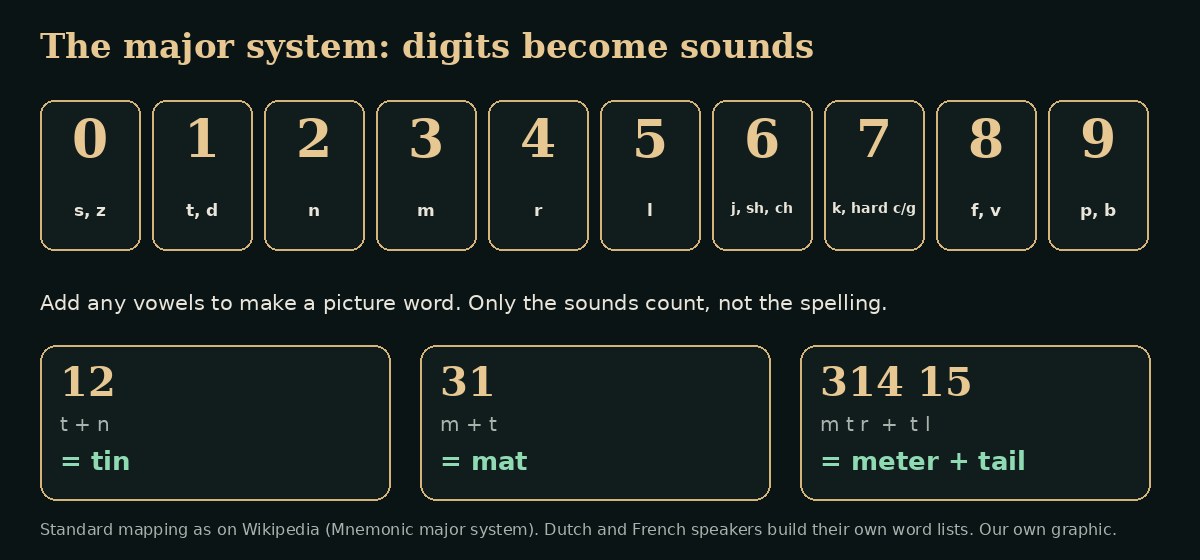
- Learn the 10 sounds
- Build fixed images for 00–99 (12 = tin, 31 = mat)
- Place them in a palace
- Build 100 PAO triples (or 52 for cards)
- Person from pair 1, action from pair 2, object from pair 3
- One scene per palace station
- List 100 people for 00–99
- Give each a signature action
- Four digits = person 1 doing person 2’s action
- Learn 10 pegs by heart
- Link item 1 to “bun” with a vivid image
- Ask yourself: what was no. 7?
- Link A to B, B to C…
- Keep each link absurd
- Use it for short lists only: one broken link loses the rest
- Split phone numbers or IBANs into groups of 2–4
- Give a group a meaning: 19-89 = “fall of the Wall”
- Hear the name and say it back
- Pick one striking facial feature
- Turn the name into an image (Daan → a dam)
- Link image and feature (water bursting over his eyebrows)
- Review the names at the end of the evening
- 26 stations with 2 cards each (or 17–18 with PAO)
- Time yourself with a stopwatch or Memory League
- World record: 12.74 seconds
- La poubelle (the bin) → a “pool of bells” overflowing the bin
- Sort words in a palace by gender or topic
- Review with Anki cards with audio
Spaced repetition and self-testing
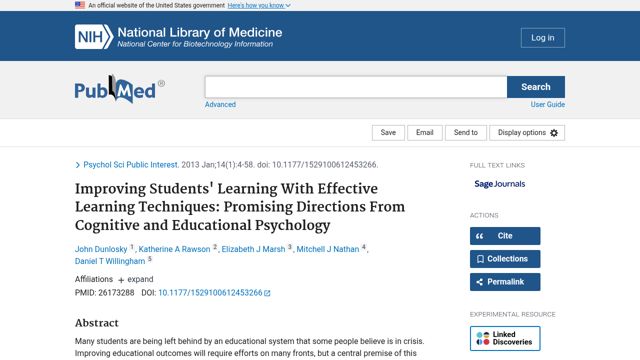
The two “boring” habits are the best supported. Retrieval practice: test yourself instead of rereading. Spacing: spread your reviews out, further and further apart as you succeed. Both got the top “high utility” rating in the main review of ten study techniques (Dunlosky et al. 2013).
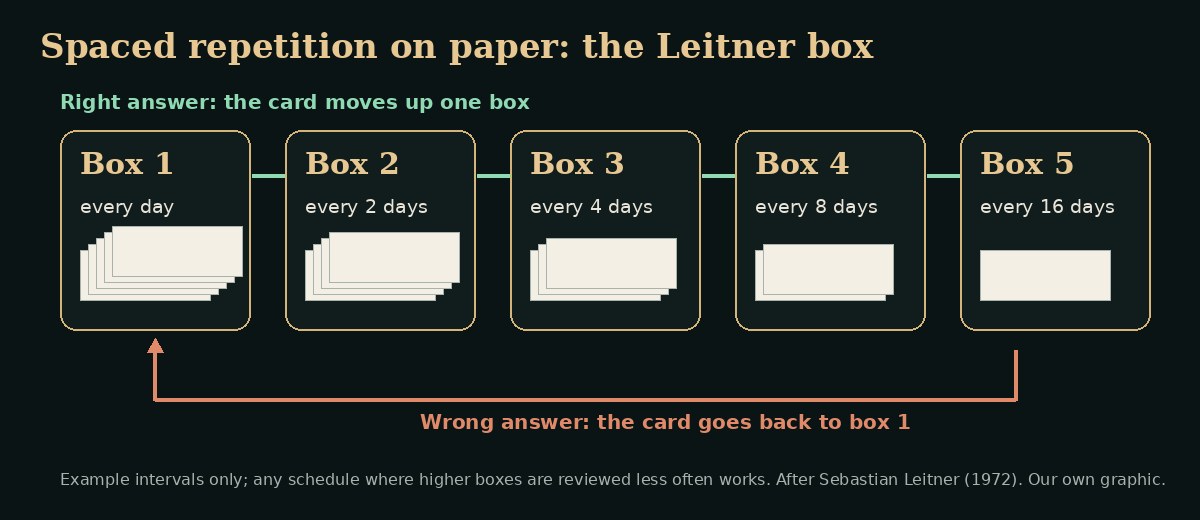
- Make short question/answer cards, one fact per card.
- Write them yourself, in your own words; keep fill-in (“cloze”) cards short.
- Turn on the FSRS scheduler in the deck options (since Anki 23.10).
- Do your reviews every day; mix topics once you know the basics (interleaving).
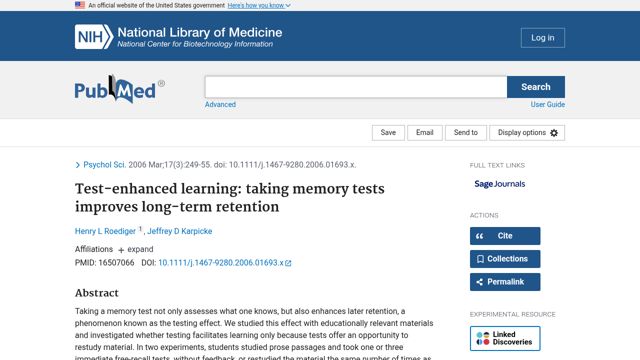
- Testing beats rereading. Students who took recall tests remembered substantially more after 2 days and 1 week than students who restudied, even though restudying felt better and won at 5 minutes (Roediger & Karpicke 2006).
- The best gap grows with how long you need to remember. A meta-analysis of 317 experiments found this pattern (Cepeda et al. 2006). In a study of more than 1,350 people the best gap was about 20–40% of the time until a test one week away, falling to 5–10% for a test one year away (Cepeda et al. 2008).
- Ten techniques ranked. High utility: practice testing, spaced practice. Moderate: elaborative interrogation, self-explanation, interleaving. Low: summarising, highlighting, keyword mnemonic, imagery for text, rereading (Dunlosky et al. 2013).
Test and train your memory
Like to test your memory? Go to the games of THE Golden Library:




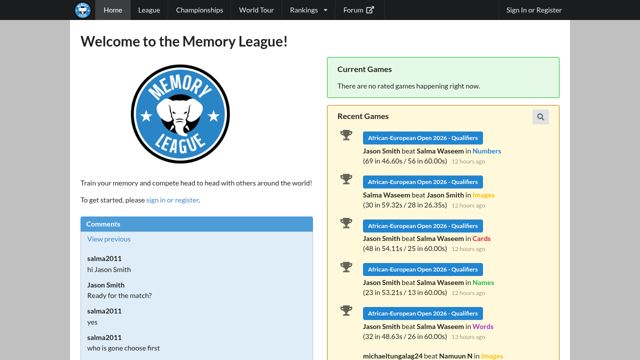
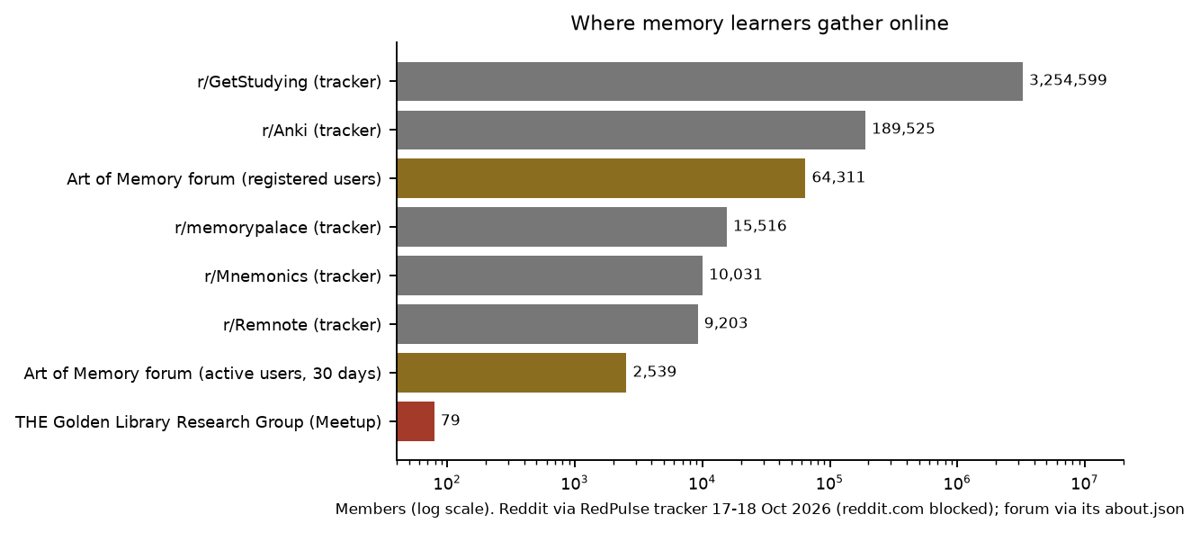
Train and compete online
Where memory training comes from
The memory palace is about 2,500 years old. The founding legend: after a banquet hall collapsed, the poet Simonides of Ceos identified the dead by remembering where each guest had sat (Wikipedia). Ancient dates are traditional and approximate.


| Year | Who or what | Why it matters |
|---|---|---|
| 1634–1825 | Hérigone, Grey, Feinaigle, Aimé Paris | The number-to-sound code grows into the major system; Paris also lectured in Belgium |
| 1966 | Frances Yates, The Art of Memory | The standard history |
| 1972 | Sebastian Leitner | The Leitner box: spaced repetition on paper |
| 1974 | Lorayne & Lucas, The Memory Book; Tony Buzan’s Use Your Head | Mass-market memory training; the term “mind map” |
| 1987 | Piotr Woźniak’s SM-2 algorithm (SuperMemo) | First computer spaced-repetition scheduler; still in Anki’s classic mode |
| 1991 | Buzan and Keene found the World Memory Championships | Dominic O’Brien wins the first; memory sport is born |
| 2003 | Maguire et al., Nature Neuroscience | Champions have no special brain structure; they use spatial strategies |
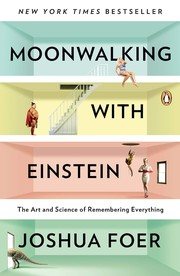
| 2006 | Anki released; Joshua Foer wins the USA Memory Championship | Free spaced repetition; the story behind Moonwalking with Einstein (2011) |
| 2016 | Athletes found the International Association of Memory (IAM) | Two rival world championships from 2017 |
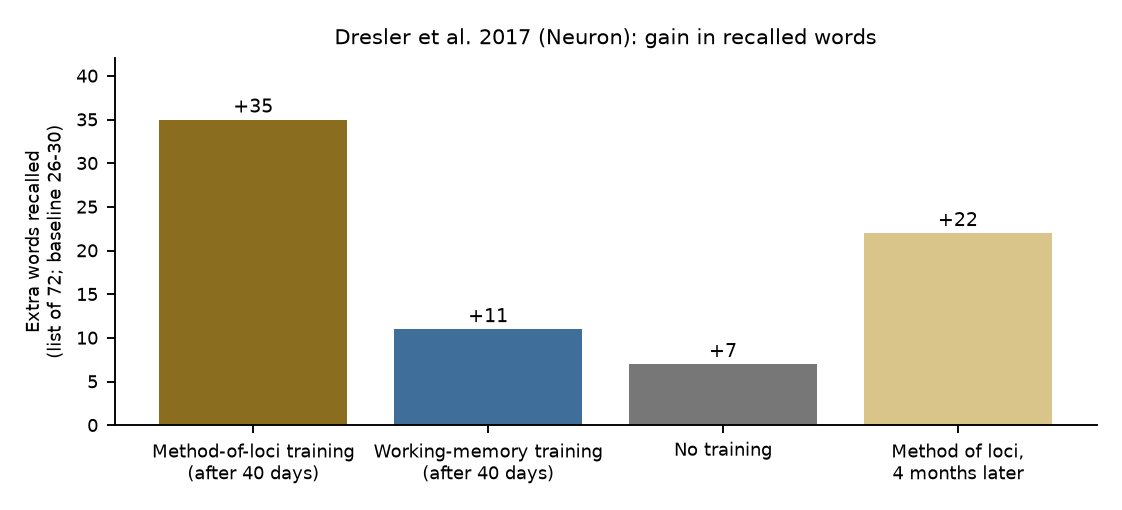
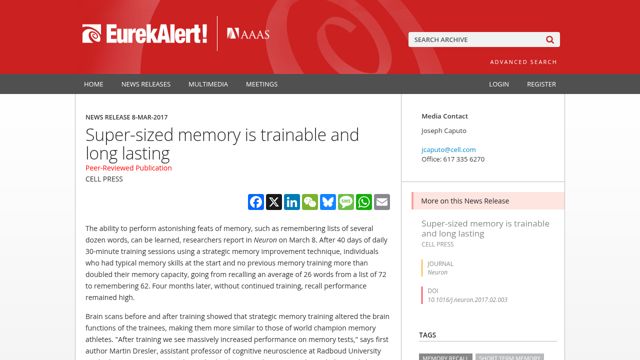
| 2017 | Dresler et al., Neuron | 40 days of loci training make beginners’ brain networks more like memory athletes’ |
| 2023 | Anki 23.10 adds FSRS | Modern machine-learned spacing in the most-used free app |
Sources: Wikipedia articles on the method of loci, art of memory, major system, Leitner system, SuperMemo, Anki, World Memory Championships and Moonwalking with Einstein; Maguire 2003; Dresler 2017.
The athletes of memory
Competitors memorise random digits, binary, cards, words, names and faces, dates and abstract images against the clock, then write them down. The classic championship is a 10-discipline “decathlon” with memorisation times from 5 minutes to 1 hour (WMSC). Memory League is the fast online format, with at most one minute per discipline.
Since 2016 the sport has two world federations: the WMSC, founded by Tony Buzan and Raymond Keene, and the athlete-led IAM, which wanted “a free, independent and democratic federation” (IAM). Each crowns its own world champion and keeps its own records.
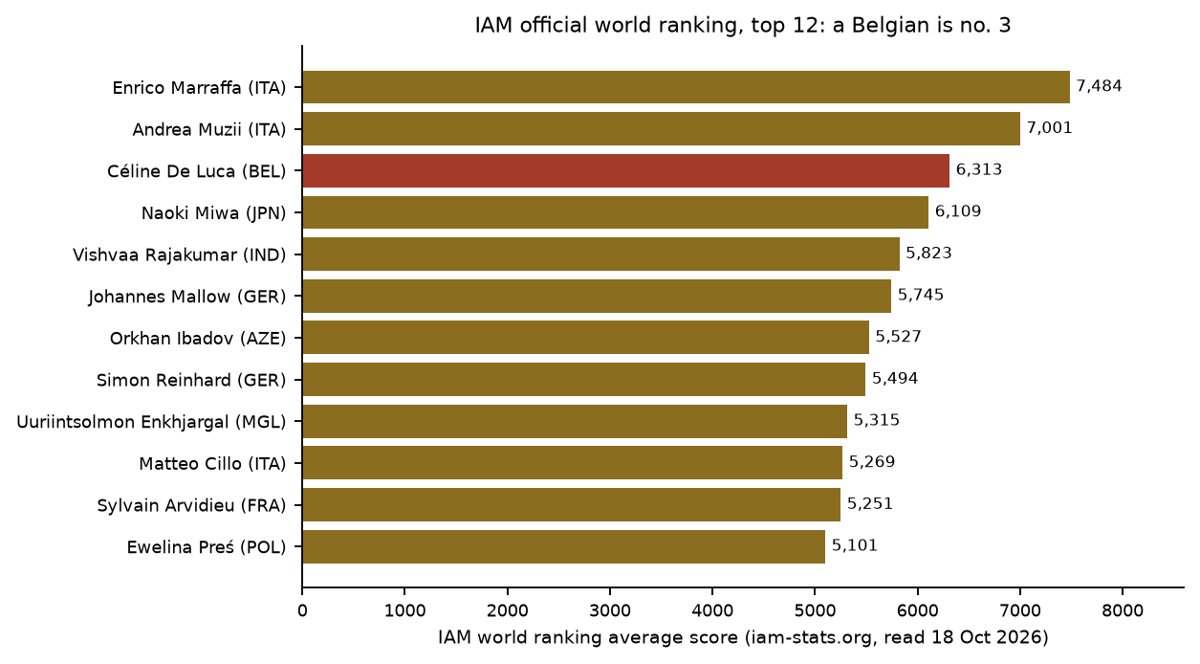
The only Belgian in the IAM world ranking, with an average score of 6,313 and the title Grandmaster Bronze. She won the German Open and the MemoryXL Open in 2026 and was second at the European Championship in April 2026. Her profile lists all 15 Belgian national records, such as 816 digits in 15 minutes and a deck of cards in 25.19 seconds. She is a veterinarian in clinical research and coaches memory athletes.
Her IAM profileEuropean Championship 2026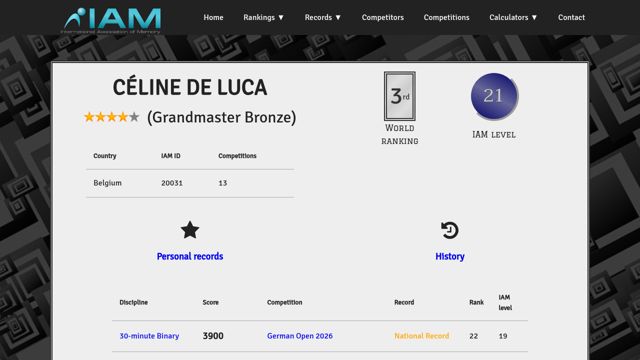
World records (IAM)
| Discipline | Record | Holder |
|---|---|---|
| Speed cards (one deck) | 12.74 s | Shijir-Erdene Bat-Enkh, Mongolia, 2018 |
| 5-minute numbers | 630 digits | Andrea Muzii, Italy, 2021 |
| Hour numbers | 3,412 digits | Orkhan Ibadov, Azerbaijan, 2023 |
| Hour cards | 1,829 cards (35 decks) | Andrea Muzii, Italy, 2019 |
| 15-minute names and faces | 224 names | Katie Kermode, England, 2018 |
| 5-minute words | 145 words | Yanjaa Wintersoul, Mongolia, 2018 |
| Memory League cards (live) | 52 cards in 16.86 s | Alex Mullen, USA, 2016 |
Sources: IAM records, Memory League records. The WMSC keeps a separate list with some higher figures (Wikipedia). Dominic O’Brien once memorised 2,808 cards (54 decks) seen once, in 2002 (Guinness record).
World championships in December 2026
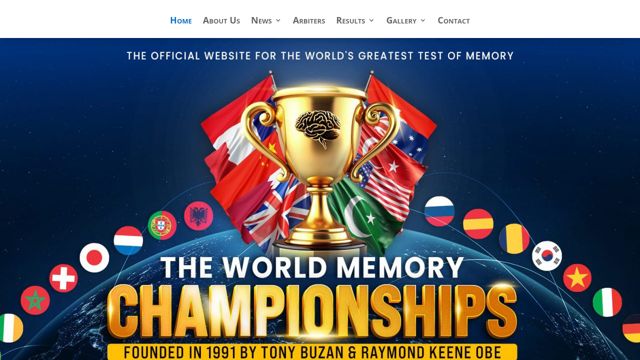
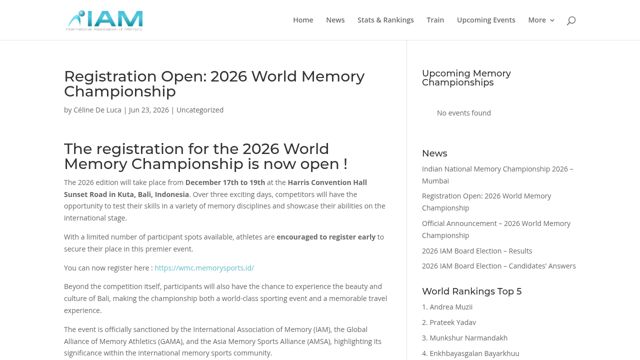
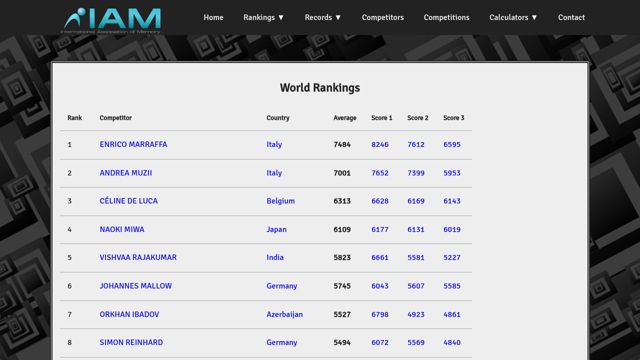
Recent world champions: Naranzul Otgon-Ulaan (Mongolia, WMSC 2025) and Vishvaa Rajakumar (India, IAM 2025, who also won the 2025 online Memory League World Championship). Belgian athletes compete abroad: no memory competition in Belgium is listed by the IAM (IAM competitions).
Videos: talks, challenges and champions
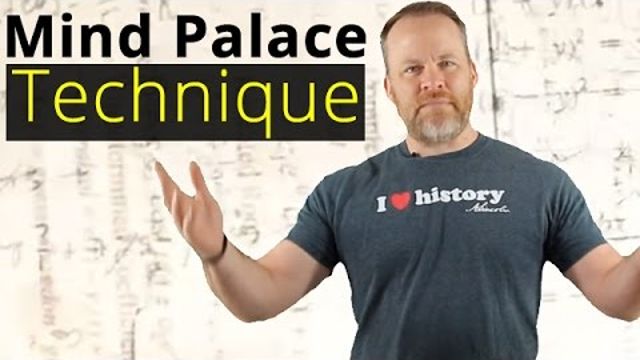
This video might be interesting for memory palaces:
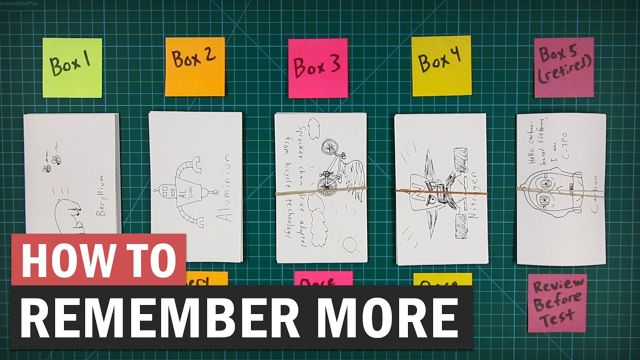
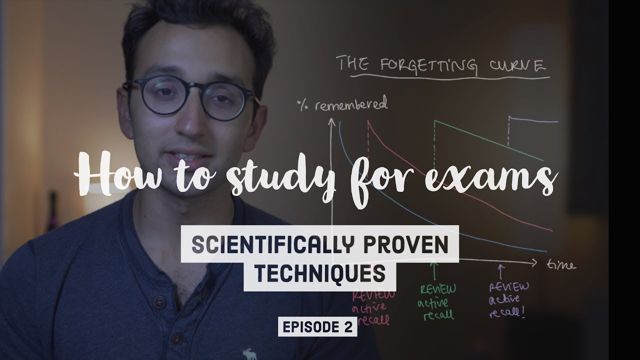
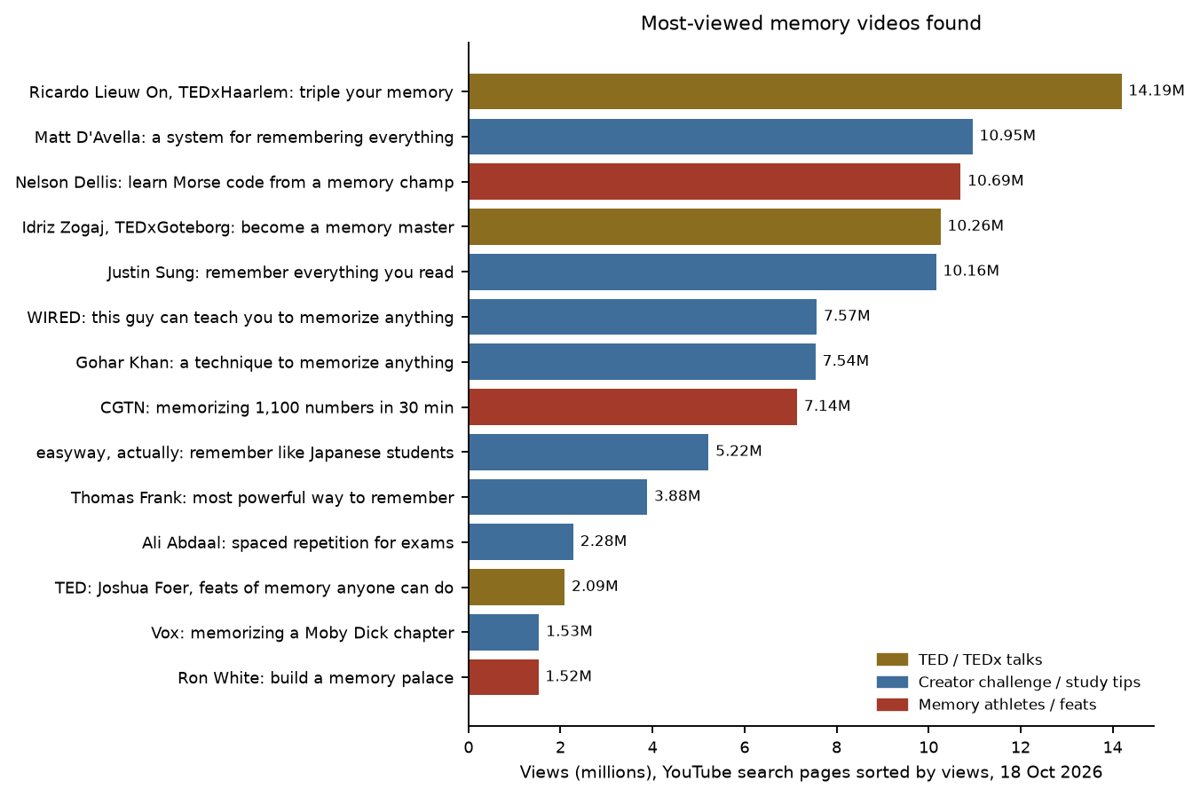
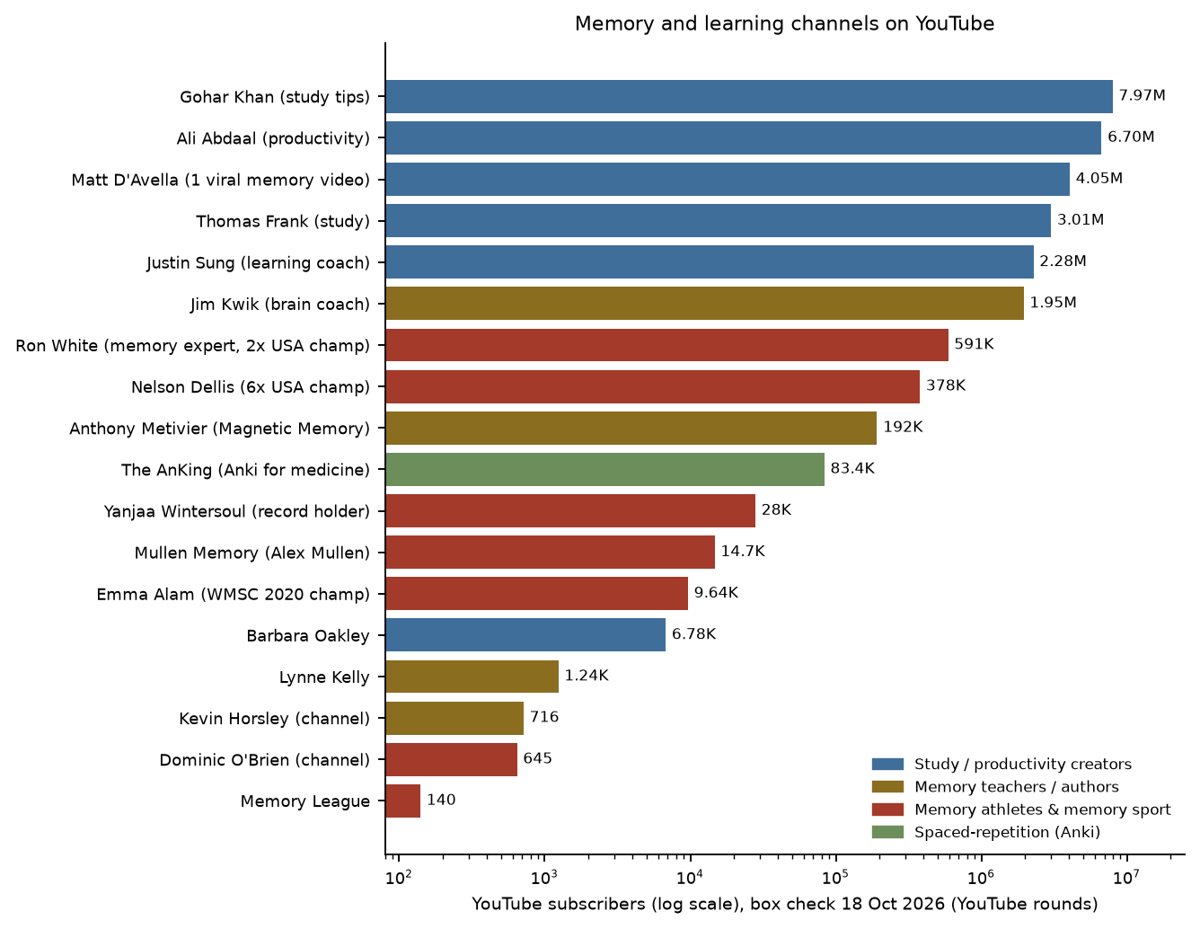
The most-viewed memory videos on YouTube (views on 18 October 2026). Plain tutorials get far fewer views than talks and “normal person learns the system” challenges.
The fun side
Best books, courses and apps
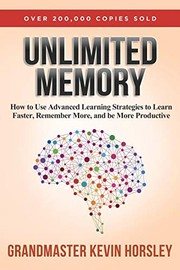
Book prices change by shop and edition, so they are not listed. Cover previews link to the free Open Library record.
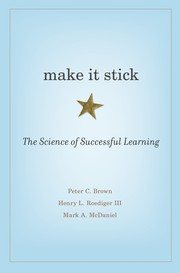
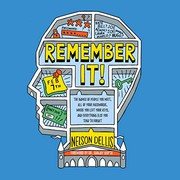
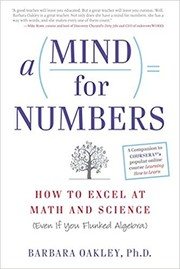
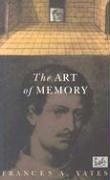
Courses

Apps
| Tool or course | Listed price | Source |
|---|---|---|
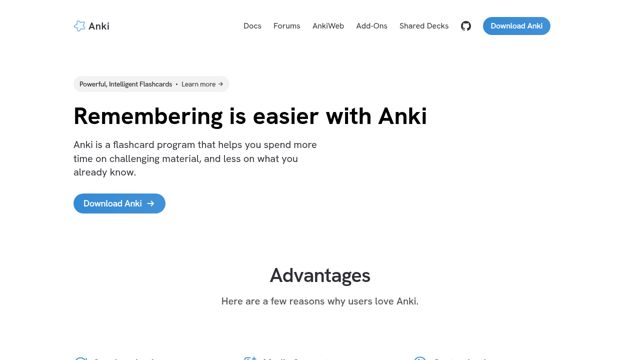
| Anki desktop, AnkiDroid | Free | ankiweb.net |
| AnkiMobile (iPhone) | $24.99 one-off | App Store |
| Memory League premium | $10 for 3 months, $25 a year* | memoryleague.com |
| Quizlet Plus | $35.99 a year or $7.99 a month* | Quizlet |
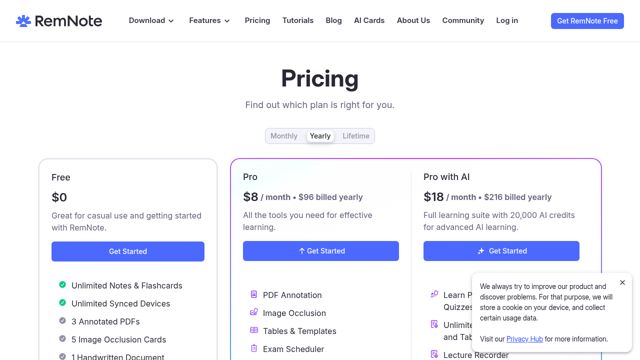
| RemNote Pro | $96 a year | RemNote |
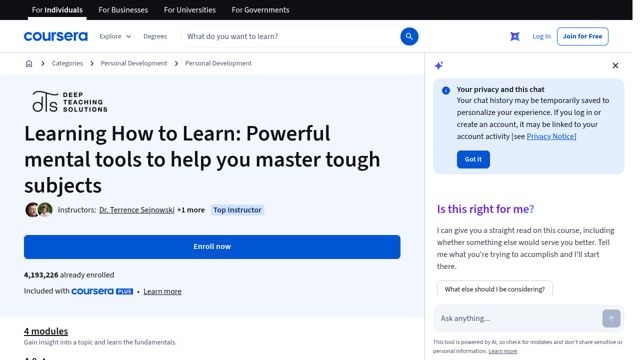
| Coursera Learning How to Learn | Free to enrol | Coursera |
| Magnetic Memory Method Masterclass | $497 | MMM |
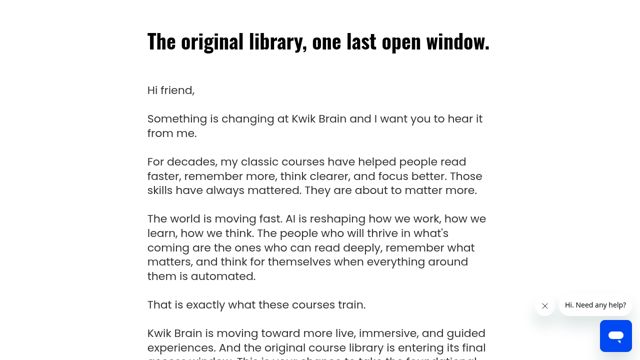
| Kwik Reading | $97 (“regular” $499) | Kwik Brain |
Prices as listed on 18 Oct 2026, in the currency shown. * = seen only in a search-result summary, not on the live page.
A neutral note on brain-training claims
What science says
| Topic | What the study found | Source |
|---|---|---|
| Memory palace in beginners | 51 beginners trained 30 min a day for 40 days: +35 words (working-memory training +11, none +7). Four months later still 22+ words above baseline; brain connectivity became more like athletes’. | Dresler 2017 |
| Champions’ brains | “Superior memory was not driven by exceptional intellectual ability or structural brain differences”; champions use spatial strategies. | Maguire 2003 |
| Method of loci, meta-analysis | Large effect on immediate ordered recall (d = 0.88), but evidence rated low to very low quality. | Ondřej 2025 |
| Testing effect | Recall tests beat restudying after 2 days and 1 week; recall beats recognition. | Roediger 2006, Rowland 2014 |
| Spacing | 839 assessments in 317 experiments: the best gap grows with the retention interval. | Cepeda 2006, 2008 |
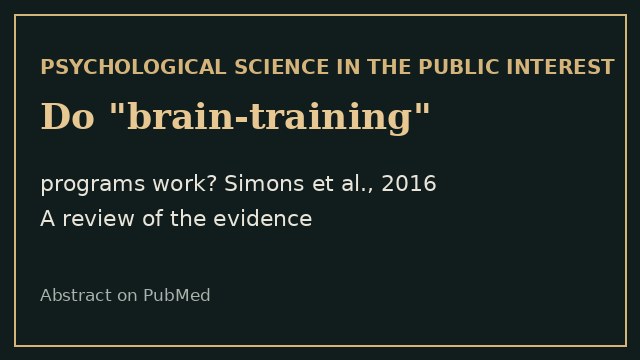
| Brain-training games | Gains on trained tasks; “little evidence” for everyday cognition. | Simons 2016 |
| Working-memory training | 87 publications: short-term gains, no reliable far transfer to intelligence, reading or arithmetic. | Melby-Lervåg 2016 |
| Sleep | Over a century of research shows sleep helps memory; slow-wave sleep supports consolidation. | Rasch & Born 2013 |
| Exercise and ageing | 120 older adults: aerobic exercise grew the hippocampus by 2% and improved spatial memory. | Erickson 2011 |
| Training in older adults | 2,832 people aged 65–94: each training improved its own ability for 2 years; 26% of the memory group improved reliably. | ACTIVE, Ball 2002 |
Belgium and Brussels
Web researcher found no regular, low-cost public memory class in Brussels, no Brussels memory competition and no memory group on Meetup (18 Oct 2026). What exists is mostly corporate, sector-funded or outside Brussels.
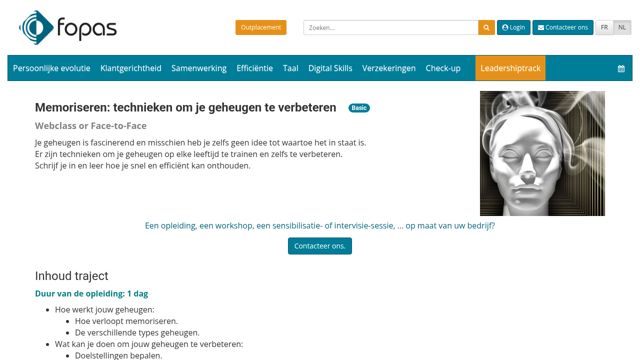
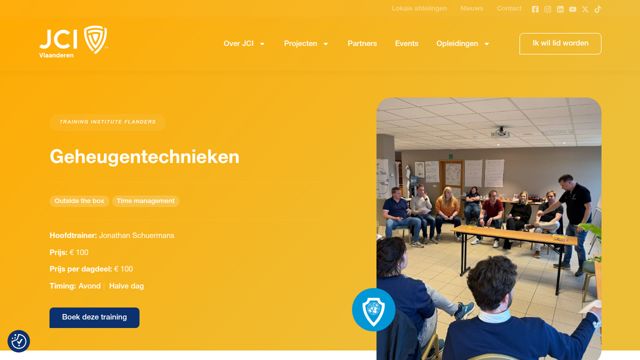
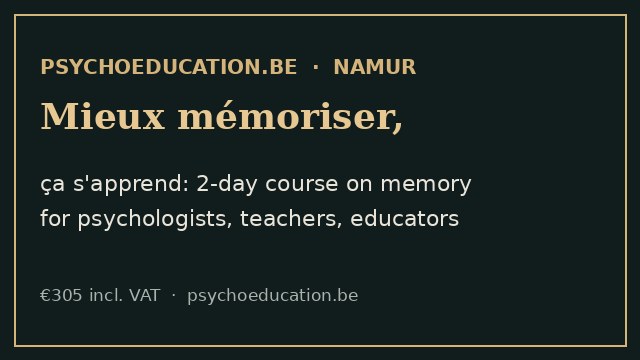
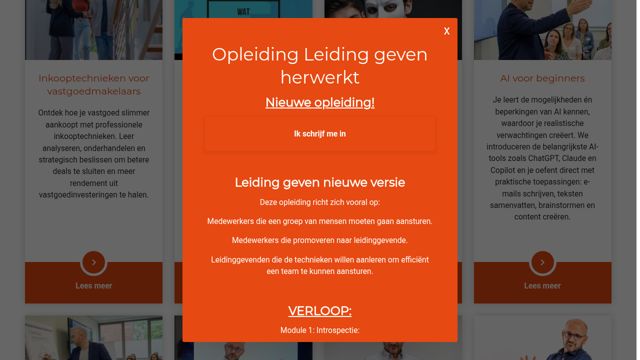
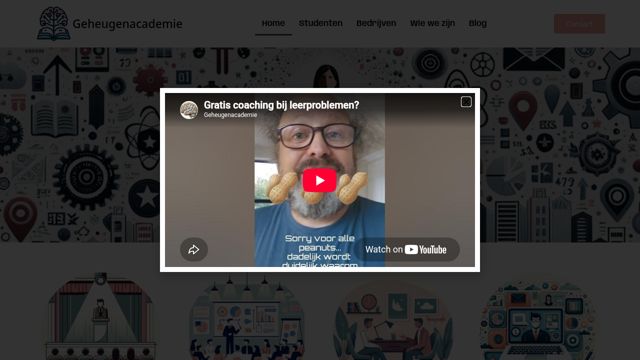
| Course | Where | Price | Source |
|---|---|---|---|
| Une mémoire infaillible (IFBD, with Sébastien Martinez, French champion 2013) | Belgium, 1 day | €795 excl. VAT | IFBD brochure |
| Memoriseren (LifeKompas) | Aartselaar | €450 excl. VAT | lifekompas.be |
| Les mémoires (psychoeducation.be) | Namur, 2 days | €305 incl. VAT | psychoeducation.be |
| Geheugentechnieken (JCI Vlaanderen) | Local chapters | €100 per half-day | jci.vlaanderen |
| Memoriseren (Fopas) | Brussels | Not shown | fopas.be |
Checked 18 Oct 2026. * = seen only in a search-result summary.
What people search for
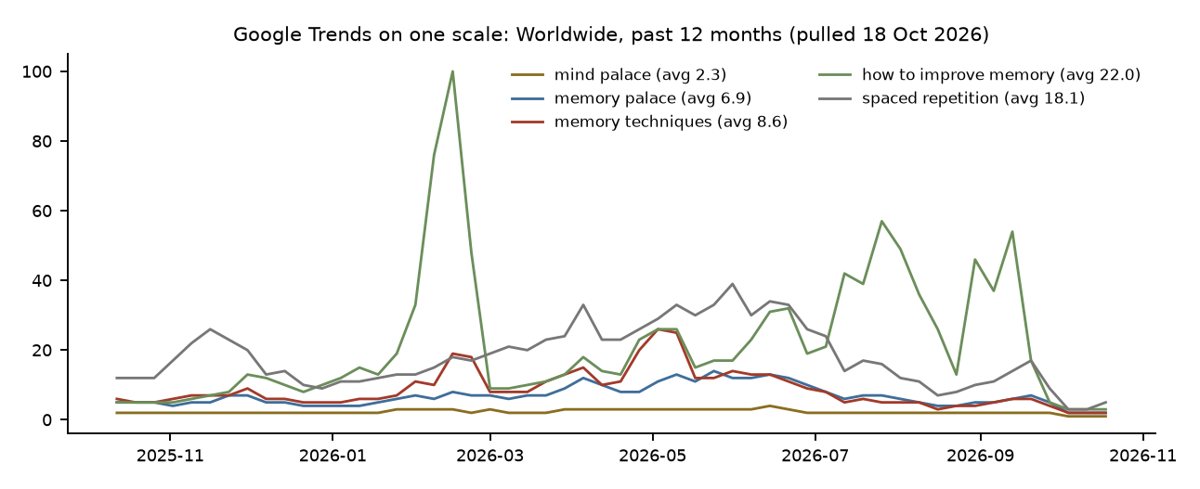
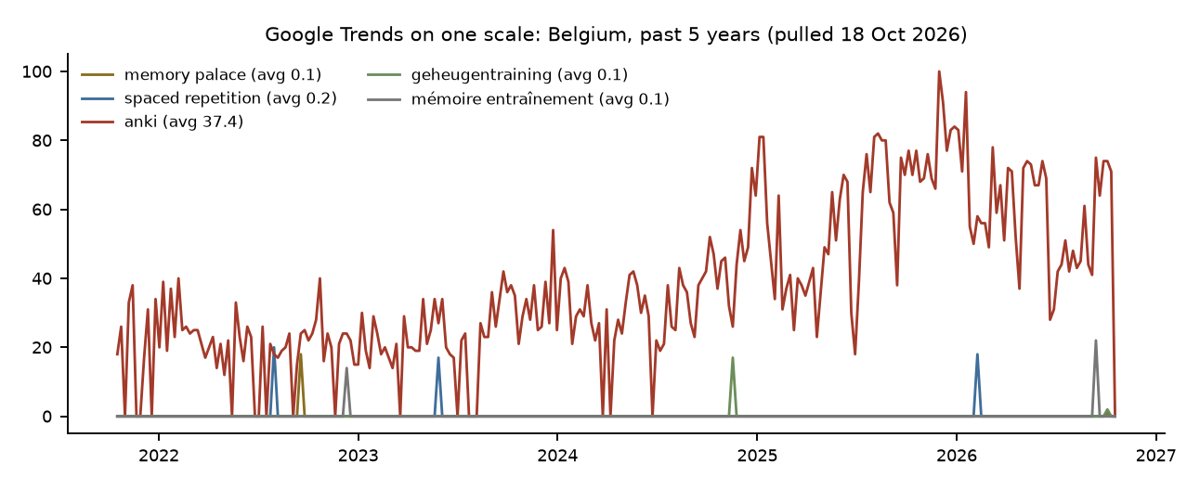
Google Trends, pulled 18 October 2026. Belgium is a small search market for memory techniques: “memory palace”, “geheugentraining” and “mémoire entraînement” cleared Google’s reporting threshold in only 1 to 5 of 262 weeks. Within Belgium, Brussels leads for the English terms. In Dutch the top query is “geheugentraining ouderen” (for older people). “Anki” looks big, but its top query is the anime Tougen Anki.
FAQ
Want to buy or sell bitcoin? Try bitcoin.de (referral link: we may earn a commission if you sign up).
Discuss Memory Training in the forum
Share your progress, ask questions and practise together with other students on the Memory Training board.
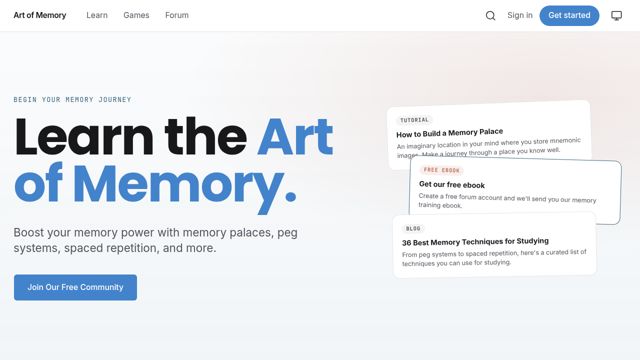
Join the Memory Training forumCreate a free accountSources
- Wikipedia: Method of loci
- Wikipedia: Art of memory
- Wikipedia: Simonides of Ceos
- Wikipedia: Rhetorica ad Herennium
- Wikipedia: Giordano Bruno
- Wikipedia: Matteo Ricci
- Wikipedia: Mnemonic major system
- Wikipedia: Dominic system
- Wikipedia: Peg system
- Wikipedia: Hermann Ebbinghaus
- Wikipedia: Leitner system
- Wikipedia: SuperMemo
- Wikipedia: Anki (software)
- Wikipedia: World Memory Championships
- Wikipedia: Memory sport
- Wikipedia: Dominic O’Brien
- Wikipedia: Harry Lorayne
- Wikipedia: Moonwalking with Einstein
- Wikipedia: Jim Kwik
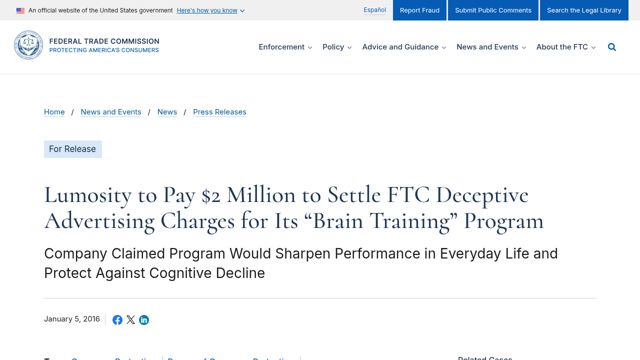
- Wikipedia: Lumosity
- Dresler et al. 2017, Neuron
- EurekAlert on Dresler 2017
- Maguire et al. 2003
- Ondřej 2025 meta-analysis
- Roediger & Karpicke 2006
- Rowland 2014
- Cepeda et al. 2006
- Cepeda et al. 2008
- Dunlosky et al. 2013
- Simons et al. 2016
- Melby-Lervåg et al. 2016
- Rasch & Born 2013
- Erickson et al. 2011
- ACTIVE trial, Ball 2002
- FTC: Lumosity settlement
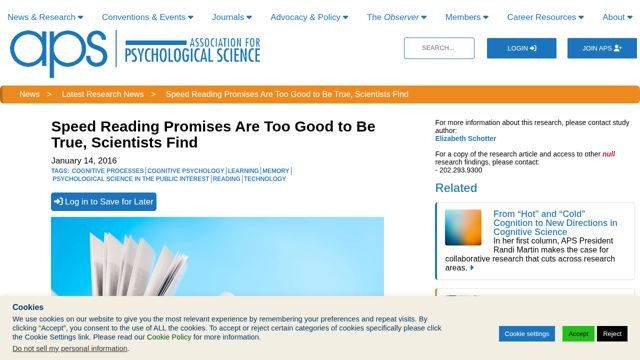
- APS on speed reading
- IAM rankings
- IAM records
- Memory League records
- Céline De Luca (IAM)
- IAM European Championship 2026
- IAM announcement 2016
- IAM World Championship 2026
- WMSC
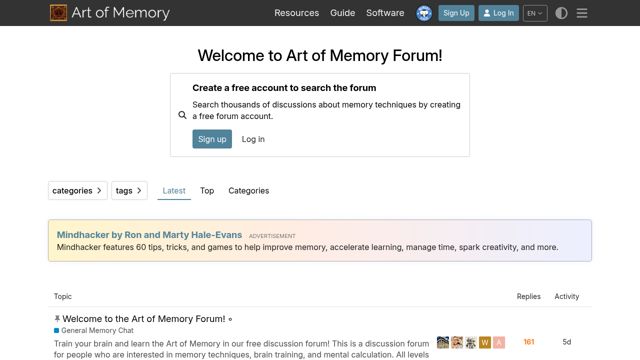
- Art of Memory forum
- Memory League
- Anki
- AnkiMobile
- RemNote pricing
- Coursera: Learning How to Learn
- Magnetic Memory Method
- Kwik Reading
- Everest Memory
- IFBD brochure
- Fopas
- LifeKompas
- JCI Vlaanderen
- psychoeducation.be
- Geheugenacademie
Last checked: 18 October 2026, from THE Golden Library report “Memory Training”. Also used: YouTube, Open Library, a third-party Reddit tracker (RedPulse) and Google Trends. Figures marked * come from search-result summaries only; seller figures are marked as claims. Image credits: historical images from Wikimedia Commons (public domain; Romberch woodcut Wellcome Collection CC BY 4.0; Cicero photo CC0); diagrams and charts are our own; video thumbnails belong to their YouTube channels; book covers are previews from Open Library; website previews are screenshots of the linked pages.
Related Posts
Channeling: From the Fox Sisters to ChatGPT
Skill guide · ChannelingChanneling: from the Fox sisters to ChatGPTChannelers…